- Home
- Tutorial
- Resource Guides
- Focus Areas
- LSF Programs
-
Professional
Development - Review Process
-
A project of LSF
Search for Resources
Description
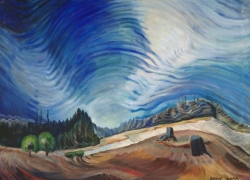
The resource uses art as a lens to explore the environmental, social, and emotional impacts of climate change within the Canadian context. The lesson plan and activities use the works of iconic Canadian and Indigenous artists to allow students to move beyond data and statistics to process climate change with observation and empathy
The resource consists of three main lessons:
1 Water Systems and the Circular Economy: The lesson begins with an analysis and discussion of the Edward Burtynsky photograph “Row Irrigation”. The students then learn more about Burtynsky from a biographical handout and a video. They record their reflection on a Burtynsky quote in a journal. Next, the students are divided into groups to observe and record their thoughts on one of three Burtynsky’s photos. The students then watch a video that explains the term “circular economy”. Afterwards, the students will co-construct definitions of linear and circular economies. As a final activity, the students take a photo related to a water-based industry that illustrates a linear or circular economy. They also write an artist statement.
2. Arctic Wildlife and Climate Impacts: This lesson begins with the students observing a map of the Arctic followed by a map of Ovilloo Tunnillie’s community and two photos of her artwork. Students then learn about the sculptor via readings and pictures of her work. This is followed with a class discussion based on provided questions. Students choose an Arctic animal to research and find five threats the animal faces due to climate change. They need to also find three actions that can be taken to protect the animal. The students present their findings via a visual representation of the researched information.
3. Nature=Based Solutions: This lesson begins with the students reviewing their learning thus far. They then view a selection of Emily Carr’s work and respond to discussion questions. They read her bio sheet and watch a video about the artist. The students will then co-construct an expanded definition of an ecosystem as a class. They learn about nature-based solutions by watching two videos and identifying an ecosystem at risk to climate change. After researching the ecosystem, they come up with an action plan centered on nature-based solutions to mitigate these risks. To complete the project the students will create a visual representation of their plan to be displayed in the classroom.
General Assessment
What skills does this resource explicitly teach?
This resource is focused on developing an awareness in the learner about climate change and how art can be used to assess and understand it.
Strengths
- Innovative lesson on climate change
- Engaging activities for all learning styles
- All of the links are up to date
- A large amount of information for the teacher and students
- Easy to use and implement
Weaknesses
- Lack of assessment tools
- No suggestions made for learners who may struggle with the material
Recommendation of how and where to use it
Climate Change through Historical and Contemporary Art in Canada is best suited for upper elementary and middle school classroom. It will work best as a resource for the Science classroom to help attain curriculum outcomes related to climate change, ecosystems and human impact on the environment. It will also be of interest to visual arts teachers and students.
Relevant Curriculum Units
The following tool will allow you to explore the relevant curriculum matches for this resource. To start, select a province listed below.
- Step 1Select a province
- Alberta
- Step 2Select a grade level
- Grade 3
- Step 3Select a subject
- Arts
- Step 4Relevant matches
- Visual Arts
- Grade 4
- Step 3Select a subject
- Arts
- Step 4Relevant matches
- Visual Arts
- Grade 5
- Grade 6
- Step 3Select a subject
- Science
- Step 4Relevant matches
- Earth Systems: Understandings of the living world, Earth, and space are deepened through investigating natural systems and their interactions.
- Living Systems: Understandings of the living world, Earth, and space are deepened through investigating natural systems and their interactions
- Visual Art
- Step 4Relevant matches
- Visual Arts
- Grade 7
- Grade 8
- Step 3Select a subject
- Visual Art
- Step 4Relevant matches
- Visual Arts: Compositon
- Visual Arts: Encounter
- British Columbia
- Step 2Select a grade level
- Grade 3
- Step 3Select a subject
- Arts
- Step 4Relevant matches
- Arts Education: Creative experiences involve an interplay between exploration, inquiry, and purposeful choice.
- Grade 4
- Grade 5
- Step 3Select a subject
- Arts
- Step 4Relevant matches
- Arts Education: Artists experiment in a variety of ways to discover new possibilities and perspectives.
- Grade 6
- Step 3Select a subject
- Arts
- Step 4Relevant matches
- Arts Education: Artistic expressions differ across time and place.
- Arts Education: Engaging in creative expression and experiences expands people’s sense of identity and community.
- Arts Education: Experiencing art is a means to develop empathy for others’ perspectives and experiences
- Grade 7
- Step 3Select a subject
- Arts
- Step 4Relevant matches
- Experiencing art challenges our point of view and expands our understanding of others
- Arts Education
- Arts Education: Engaging in the arts develops people’s ability to understand and express complex ideas
- Arts Education: Through art making, one’s sense of identity and community continually evolves.
- Science
- Step 4Relevant matches
- Science 7: Earth and its climate have changed over geological time
- Science 7: Evolution by natural selection provides an explanation for the diversity and survival of living things.
- Grade 8
- Step 3Select a subject
- Arts
- Step 4Relevant matches
- Arts Education: Dance, drama, music, and visual arts are each unique languages for creating and communicating.
- Arts Education: Individual and collective expression can be achieved through the arts.
- Manitoba
- New Brunswick
- Step 2Select a grade level
- Grade 3
- Step 3Select a subject
- Visual Art
- Step 4Relevant matches
- Communicate
- Connect
- Create
- Grade 4
- Step 3Select a subject
- Arts
- Step 4Relevant matches
- Arts General: Creating, Making, and Presenting
- Arts General: Perceiving & Responding
- Arts General: Understanding and Connecting Contexts of Time, Place, and Community
- Science
- Step 4Relevant matches
- Properties and Uses of Earth Materials: Learning and Living Sustainably
- Visual Art
- Step 4Relevant matches
- Communicate
- Connect
- Create
- Grade 5
- Step 3Select a subject
- Arts
- Step 4Relevant matches
- Arts General: Creating, Making, and Presenting
- Arts General: Perceiving & Responding
- Arts General:Understanding and Connecting Contexts of Time, Place, and Community
- Visual Art
- Step 4Relevant matches
- Communicate
- Connect
- Create
- Grade 6
- Step 3Select a subject
- Visual Art
- Step 4Relevant matches
- Communicate
- Connect
- Create
- Grade 7
- Step 3Select a subject
- Visual Art
- Step 4Relevant matches
- Communicate
- Connect
- Create
- Grade 8
- Step 3Select a subject
- Visual Art
- Step 4Relevant matches
- Communicate
- Connect
- Create
- Newfoundland & Labrador
- Step 2Select a grade level
- Grade 3
- Step 3Select a subject
- Arts
- Step 4Relevant matches
- Arts: Creating, Making, and Presenting
- Arts: Perceiving, Reflecting, and Responding
- Grade 4
- Grade 5
- Grade 6
- Step 3Select a subject
- Science
- Step 4Relevant matches
- Diversity of Life
- Visual Art
- Step 4Relevant matches
- Art: Creating, Making, and Presenting
- Art: Understanding and Connecting Contexts of Time, Place, and Community
- Art:Perceiving, Reflecting, and Responding
- Grade 7
- Grade 8
- Step 3Select a subject
- Arts
- Step 4Relevant matches
- Creating, Making and Presenting
- Visual Art
- Visual Art: Perceiving,Reflecting and Responding
- Visual Art: Understanding and Connecting Contexts of Time, Place, and Community
- Northwest Territories
- Step 2Select a grade level
- Grade 3
- Step 3Select a subject
- Arts
- Step 4Relevant matches
- Arts Education 3: Visual Art
- Arts Education: Creative experiences involve an interplay between exploration, inquiry, and purposeful choice.
- Grade 4
- Grade 5
- Step 3Select a subject
- Arts
- Step 4Relevant matches
- Arts Education: Works of art influence and are influenced by the world around us.
- Grade 6
- Step 3Select a subject
- Arts
- Step 4Relevant matches
- Arts Education: Artistic expressions differ across time and place.
- Arts Education: Engaging in creative expression and experiences expands people’s sense of identity and community.
- Arts Education: Experiencing art is a means to develop empathy for others’ perspectives and experiences
- Grade 7
- Step 3Select a subject
- Arts
- Step 4Relevant matches
- Experiencing art challenges our point of view and expands our understanding of others
- Arts Education
- Arts Education: Engaging in the arts develops people’s ability to understand and express complex ideas
- Arts Education: Through art making, one’s sense of identity and community continually evolves.
- Science
- Step 4Relevant matches
- Science 7: Earth and its climate have changed over geological time
- Science 7: Evolution by natural selection provides an explanation for the diversity and survival of living things.
- Grade 8
- Step 3Select a subject
- Arts
- Step 4Relevant matches
- Arts Education: Artists often challenge the status quo and open us to new perspectives and experiences.
- Arts Education: Individual and collective expression can be achieved through the arts.
- Nova Scotia
- Step 2Select a grade level
- Grade 3
- Step 3Select a subject
- Visual Art
- Step 4Relevant matches
- Visual Arts 3: Investigate
- Visual Arts 3:Create
- Visual Arts 3:Responnd
- Grade 4
- Step 3Select a subject
- Science
- Step 4Relevant matches
- Science 4: Habitats
- Visual Art
- Step 4Relevant matches
- Visual Arts 4: Analyse
- Visual Arts 4: Create
- Visual Arts 4: Respond
- Grade 5
- Step 3Select a subject
- Science
- Step 4Relevant matches
- Science 5: Weather
- Visual Art
- Step 4Relevant matches
- Visual Arts 5: Analyse
- Visual Arts 5: Create
- Visual Arts 5: Respond
- Grade 6
- Step 3Select a subject
- Science
- Step 4Relevant matches
- Science 6: Diversity of Life
- Visual Art
- Step 4Relevant matches
- Visual Arts 6 Analyse
- Visual Arts 6: Create
- Visual Arts 6: Respond
- Grade 7
- Step 3Select a subject
- Science
- Step 4Relevant matches
- Science 7: Environmental Action
- Visual Art
- Step 4Relevant matches
- Visual Arts 7: Analyzing Art
- Visual Arts 7: Creating Art
- Visual Arts 7: Responding to Art
- Grade 8
- Step 3Select a subject
- Science
- Step 4Relevant matches
- Science 8: Climate Change
- Visual Art
- Step 4Relevant matches
- Visual Arts 8: Analyzing Art
- Visual Arts 8: Creating Art
- Visual Arts 8: Responding to Art
- Nunavut
- Ontario
- Step 2Select a grade level
- Grade 3
- Step 3Select a subject
- Arts
- Step 4Relevant matches
- Arts: Visual Arts
- Grade 4
- Step 3Select a subject
- Arts
- Step 4Relevant matches
- Arts: Visual Arts
- Science & Technology
- Step 4Relevant matches
- Life Systems: Habitats and Communities
- Grade 5
- Step 3Select a subject
- Arts
- Step 4Relevant matches
- Arts: Visual Arts
- Science & Technology
- Step 4Relevant matches
- Earth and Space Systems: Conservation of Energy & Resources
- Grade 6
- Step 3Select a subject
- Arts
- Step 4Relevant matches
- Arts: Visual Arts
- Science & Technology
- Step 4Relevant matches
- Life Systems: Biodiversity
- Grade 7
- Step 3Select a subject
- Arts
- Step 4Relevant matches
- Arts: Visual Arts
- Science & Technology
- Step 4Relevant matches
- Life Systems: Interactions in the Environment
- Grade 8
- Step 3Select a subject
- Arts
- Step 4Relevant matches
- Arts: Visual Arts
- Prince Edward Island
- Step 2Select a grade level
- Grade 3
- Step 3Select a subject
- Arts
- Step 4Relevant matches
- Visual Arts 1: Creating and Presenting
- Visual Arts 1: Exploring Forms and Cultural Contexts
- Visual Arts 1: Reflecting, Responding, and Analysing
- Grade 4
- Step 3Select a subject
- Science
- Step 4Relevant matches
- Habitats
- Visual Art
- Step 4Relevant matches
- Visual Arts: Creating and Presenting
- Visual Arts: Exploring Forms and Cultural Context
- Visual Arts: Reflecting, Responding and Analysing
- Grade 5
- Step 3Select a subject
- Science
- Step 4Relevant matches
- Weather
- Visual Art
- Step 4Relevant matches
- Visual Arts: Creating and Presenting
- Visual Arts: Exploring Forms and Cultural Contexts
- Vsual Arts: Refl ecting, Responding, and Analysing
- Grade 6
- Step 3Select a subject
- Science
- Step 4Relevant matches
- Diversity of Life
- Visual Art
- Step 4Relevant matches
- Visual Art: Exploring Forms and Cultural Contexts
- Visual Art: Reflecting, Responding, and Analysing
- Visual Arts: Creating and Presenting
- Grade 7
- Step 3Select a subject
- Science
- Step 4Relevant matches
- Interactions Within Ecosystems
- Visual Art
- Step 4Relevant matches
- Visual Arts: Drawing Unit
- Grade 8
- Step 3Select a subject
- Visual Art
- Step 4Relevant matches
- Visual Arts: Drawing Unit
- Quebec
- Step 2Select a grade level
- Grade 3
- Step 3Select a subject
- Arts
- Step 4Relevant matches
- Arts: Visual Arts: To appreciate works of art, traditional artistic objects, media images, personal productions and thos of classmates
- Arts: Visual Arts: To produce individual works in the visual arts
- Grade 4
- Step 3Select a subject
- Arts
- Step 4Relevant matches
- Arts: Visual Arts: To appreciate works of art, traditional artistic objects, media images, personal productions and thos of classmates
- Arts: Visual Arts: To produce individual works in the visual arts
- Science & Technology
- Step 4Relevant matches
- Living Things
- Grade 5
- Step 3Select a subject
- Arts
- Step 4Relevant matches
- Arts: Visual Arts: To produce individual works in the visual arts
- Arts: Visual Arts: To appreciate works of art, media images, personal productions and those of classmates
- Science & Technology
- Step 4Relevant matches
- Living Things
- Grade 6
- Step 3Select a subject
- Arts
- Step 4Relevant matches
- Arts: Visual Arts: To produce individual works in the visual arts
- Arts: Visual Arts: To appreciate works of art, media images, personal productions and those of classmates
- Science & Technology
- Step 4Relevant matches
- Living Things
- Grade 7
- Step 3Select a subject
- Arts
- Step 4Relevant matches
- Arts: Visual Arts: Appreciates works of art and cultural objects from the world's artistic heritage,
- Arts: Visual Arts: Creates personal images
- Science & Technology
- Step 4Relevant matches
- The Living World
- Grade 8
- Step 3Select a subject
- Arts
- Step 4Relevant matches
- Arts: Visual Arts: Appreciates works of art and cultural objects from the world's artistic heritage,
- Arts: Visual Arts: Creates personal images
- Science & Technology
- Step 4Relevant matches
- The Living World
- Saskatchewan
- Step 2Select a grade level
- Grade 3
- Step 3Select a subject
- Arts
- Step 4Relevant matches
- Arts Education 3 : Creative/Productive
- Arts Education 3: Critical/Responsive
- Arts Education 3: Cultural/Historical
- Grade 4
- Grade 5
- Grade 6
- Grade 7
- Grade 8
- Step 3Select a subject
- Arts
- Step 4Relevant matches
- Arts Education 8: Creative Productive
- Arts Education 8: Critical/Responsive
- Arts Education: Cultural/Historical
- Arts Education: Dance, drama, music, and visual arts are each unique languages for creating and communicating.
- Yukon Territory
- Step 2Select a grade level
- Grade 3
- Step 3Select a subject
- Arts
- Step 4Relevant matches
- Arts Education: Creative experiences involve an interplay between exploration, inquiry, and purposeful choice.
- Grade 4
- Grade 5
- Step 3Select a subject
- Arts
- Step 4Relevant matches
- Arts Education: Engaging in creative expression and experiences expands people’s sense of identity and belonging.
- Arts Education: Works of art influence and are influenced by the world around us.
- Grade 6
- Step 3Select a subject
- Arts
- Step 4Relevant matches
- Arts Education: Artistic expressions differ across time and place.
- Arts Education: Engaging in creative expression and experiences expands people’s sense of identity and community.
- Arts Education: Experiencing art is a means to develop empathy for others’ perspectives and experiences
- Grade 7
- Step 3Select a subject
- Arts
- Step 4Relevant matches
- Experiencing art challenges our point of view and expands our understanding of others
- Arts Education
- Arts Education: Engaging in the arts develops people’s ability to understand and express complex ideas
- Arts Education: Through art making, one’s sense of identity and community continually evolves.
- Science
- Step 4Relevant matches
- Science 7: Earth and its climate have changed over geological time
- Science 7: Evolution by natural selection provides an explanation for the diversity and survival of living things.
- Grade 8
- Step 3Select a subject
- Arts
- Step 4Relevant matches
- Arts Education: Dance, drama, music, and visual arts are each unique languages for creating and communicating.
- Arts Education: Individual and collective expression can be achieved through the arts.
Themes Addressed
Air, Atmosphere & Climate (1)
- Climate Change
Ecosystems (4)
- Appreciating the Natural World
- Biodiversity
- Endangered Species
- Wildlife Protection
Water (2)
- Marine Environments
- Water Quality
Sustainability Education Principles
| Principle | Rating | Explanation |
|---|---|---|
| Consideration of Alternative Perspectives | Very Good | The resource does allow for the consideration of alternative perspectives by having the students reflecting on artwork from different eras as well as indigenous perspectives. |
Consideration of Alternative Perspectives:
| ||
| Multiple Dimensions of Problems & Solutions | Very Good | Due to the resource's use of a variety of perspectives, the students learn that climate change is not just an environmental issue but also a social and cultural one affecting everyone. |
| Multiple Dimensions of Problems & Solutions: Effectively addresses the environmental, economic and social dimensions of the issue(s) being explored.
| ||
| Respects Complexity | Very Good | This resource helps students to understand that working towards fighting climate change isn't simply about stopping an action but considering biodiversity, rethinking urban planning and respecting indigenous traditions in order to aptly apply nature-based solutions. |
| Respects Complexity: The complexity of the problems/issues being discussed is respected. | ||
| Acting on Learning | Very Good | The students are tasked with creating a project to restore a local ecosystem. This can involve planting native species or protecting a local watershed. |
| Acting on Learning: Learning moves from understanding issues to working towards positive change — in personal lifestyle, in school, in the community, or for the planet
| ||
| Values Education | Very Good | The resource and its activities teach the students that the issue of climate change is not just a scientific issue but a moral challenge where a shift in our morals needs to take place where the planet is a priority. |
| Values Education: Students are explicitly provided with opportunities to identify, clarify and express their own beliefs/values. | ||
| Empathy & Respect for Humans | Satisfactory | Students will gain an appreciation and understanding of indigenous perspectives on climate change. |
| Empathy & Respect for Humans: Empathy and respect are fostered for diverse groups of humans (including different genders, ethnic groups, sexual preferences, etc.). | ||
| Personal Affinity with Earth | Very Good | The students gain an appreciation for the Earth through the observations of artists and their artwork. The students also learn to view the Earth as a living, meaningful place worthy of protection. Their actions in the final project will also help them to protect a local ecosystem. |
| Personal Affinity with Earth: Encourages a personal affinity with -the natural world.
| ||
| Locally-Focused Learning | Good | The resource allows the students to explore the Earth as a worthwhile and important to protect by building an awareness around its resources as well as its beauty. The local focus comes about in the final activity where they develop a project to protect a local ecosystem. |
| Locally-Focused Learning: Includes learning experiences that take advantage of issues/elements within the local community.
| ||
| Past, Present & Future | Very Good | By observing the artworks from different eras, the students learn that the issue of climate change has developed over time. It also allows them to gain a perspective of the issue as it stands today while empowering the students to start making decisions that will make a difference in the future. |
| Past, Present & Future: Promotes an understanding of the past, a sense of the present, and a positive vision for the future. | ||
Pedagogical Approaches
| Principle | Rating | Explanation |
|---|---|---|
| Open-Ended Instruction | Very Good | This resource provides open-ended instruction by using the visual art of three different artists along with open-ended prompts to allow the students to explore the questions posed. The lesson plans also allow the students to interpret visual data and art. The final activity allows the students to research and design their own project to restore a local ecosystem. |
| Open-Ended Instruction
: Lessons are structured so that multiple/complex answers are possible; students are not steered toward one 'right' answer. | ||
| Integrated Learning | Very Good |
|
| Integrated Learning: Learning brings together content and skills from more than one subject area
| ||
| Inquiry Learning | Good | The students are active investigators in the activities in this resource. This is accomplished by asking open-ended questions about the art pieces, investigating environmental issues shown in the image files, and then applying the knowledge learned by creating a project to protect a local ecosystem. |
| Inquiry Learning: Learning is directed by questions, problems, or challenges that students work to address.
| ||
| Differentiated Instruction | Good | The resource addresses the needs of a variety of learners and their different learning styles with activities that are engaging and thought-provoking. |
| Differentiated Instruction: Activities address a range of student learning styles, abilities and readiness.
| ||
| Experiential Learning | Very Good | The culminating project gives the students a practical experience in a local ecosystem to initiate change. |
| Experiential Learning: Authentic learning experiences are provided
| ||
| Cooperative Learning | Satisfactory | |
| Cooperative Learning: Group and cooperative learning strategies are a priority.
| ||
| Assessment & Evaluation | Poor/Not considered | There are no formal assessment tools included in the resource. The teacher can easily assess the final project. |
| Assessment & Evaluation: Tools are provided that help students and teachers to capture formative and summative information about students' learning and performance. These tools may include reflection questions, checklists, rubrics, etc. | ||
| Peer Teaching | Satisfactory | |
| Peer Teaching: Provides opportunities for students to actively present their knowledge and skills to peers and/or act as teachers and mentors.
| ||
| Case Studies | Poor/Not considered | There are no case studies included in this resource. |
| Case Studies: Relevant case studies are included. Case studies are thorough descriptions of real events from real situations that students use to explore concepts in an authentic context. | ||
| Locus of Control | Very Good | The final activity of the lesson allows for a considerable amount of choice as the student's design a project to protect or restore a local ecosystem. |
| Locus of Control: Meaningful opportunities are provided for students to choose elements of program content, the medium in which they wish to work, and/or to go deeper into a chosen issue. | ||