- Home
- Tutorial
- Resource Guides
- Focus Areas
- LSF Programs
-
Professional
Development - Review Process
-
A project of LSF

Search for Resources
Description
Biodiversity and the balance of nature explores the concept of biodiversity at three levels: genetic, species and ecosystems. Students will build their knowledge while deepening their understanding of biodiversity. They learn how these interconnected layers work together to support life on Earth, and examine the concept of ecosystem services, the benefits that nature provides to humans, while also gaining an understanding of the major threats facing biodiversity today. In addition, students explore real actions they can take to help protect the natural world around them. Protecting biodiversity is essential for the health of our planet and all living things.
Students will:
- answer a few questions to check their understanding of biodiversity
- learn more about Canada’s biodiversity through the Wild Species Report
- explore the ecosystems services nature provides us with such as food, raw materials, medicines and spaces to relax
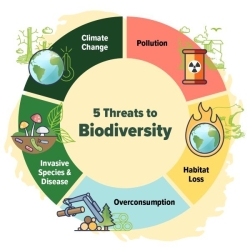
- learn more about the five main threats to biodiversity through a circular infographic that highlights the impact of human activities
- understand the impacts of endangered, invasive, and extinct species, and how the loss of one species can affect entire ecosystems
- examine a map of Canada showing protected and conserved areas and efforts taken to protect the land and water by 2030
- explore real examples of conservation, such as species recovery and habitat restoration in Canada
- learning ways to protect biodiversity from home and precautions they can take to prevent the spread of invasive species
The resource provides a link to The Protect Nature Challenge which encourages Canadians to take everyday actions that help protect biodiversity and nature. The website provides a list of 31 simple and easy to complete actions that schools can take part in to protect nature.
General Assessment
Recommendation of how and where to use it
This resource supports grade seven to twelve outcomes related to biodiversity, habitat loss, ecosystems, invasive species and human impacts on natural systems. To extend the learning, the resource provides numerous links to external resources. Students can explore real examples of Canadian biodiversity using the Wild Species report, research a species at risk in Canada and suggest conservation actions or design a plan to prevent the spread of invasive species while raising awareness in their community. As a class, students can take measurable steps to protect biodiversity in their local surrounding, such as planting a native garden to attract pollinators or contribute to real scientific research on biodiversity by collecting and submitting observations to national databases.
Explore the Resources for educators - Canada.ca page for additional resources on biodiversity and other topics.
Relevant Curriculum Units
The following tool will allow you to explore the relevant curriculum matches for this resource. To start, select a province listed below.
- Step 1Select a province
- Alberta
- Step 2Select a grade level
- Grade 7
- Step 3Select a subject
- Science
- Step 4Relevant matches
- Interactions and Ecosystems
- Grade 9
- Step 3Select a subject
- Science
- Step 4Relevant matches
- Biological Diversity
- Knowledge and Employability Science: Biological Diversity (Social and Environmental Contexts Emphasis)
- Grade 11
- Step 3Select a subject
- Biology
- Step 4Relevant matches
- Biology 20: Ecosystems and Population Change
- British Columbia
- Step 2Select a grade level
- Grade 11
- Step 3Select a subject
- Environmental Science
- Step 4Relevant matches
- Environmental Science 11: Human practices affect the sustainability of ecosystems
- Environmental Science 11:Humans can play a role in stewardship and restoration of ecosystems
- Science
- Step 4Relevant matches
- Science for Citizenship 11: Scientific understanding enables humans to respond and adapt to changes locally and globally
- Grade 12
- Step 3Select a subject
- Science
- Step 4Relevant matches
- Specialized Science 12: Biodiversity is dependent on the complex interactions and processes between biotic and abiotic factors
- Manitoba
- Step 2Select a grade level
- Grade 7
- Step 3Select a subject
- Science
- Step 4Relevant matches
- Interactions Within Ecosystems
- Life Systems
- Grade 10
- Step 3Select a subject
- Science
- Step 4Relevant matches
- Life Systems
- Senior 2 Science: Dynamics of Ecosystems
- Grade 12
- Step 3Select a subject
- Biology
- Step 4Relevant matches
- Biology: Conservation of Biodiversity
- New Brunswick
- Newfoundland & Labrador
- Step 2Select a grade level
- Grade 7
- Step 3Select a subject
- Science
- Step 4Relevant matches
- Interaction of Ecosystems
- Grade 10
- Step 3Select a subject
- Science
- Step 4Relevant matches
- Science 1206: Sustainability of Ecosystems
- Grade 11
- Step 3Select a subject
- Science
- Step 4Relevant matches
- Science 2200: Ecosytems
- Northwest Territories
- Step 2Select a grade level
- Grade 11
- Step 3Select a subject
- Biology
- Step 4Relevant matches
- Biology 20: Ecosystems and Population Change
- Environmental Science
- Step 4Relevant matches
- Environmental Science 11: Human practices affect the sustainability of ecosystems
- Environmental Science 11:Humans can play a role in stewardship and restoration of ecosystems
- Science
- Step 4Relevant matches
- Science for Citizenship 11: Scientific understanding enables humans to respond and adapt to changes locally and globally
- Grade 12
- Step 3Select a subject
- Science
- Step 4Relevant matches
- Specialized Science 12: Biodiversity is dependent on the complex interactions and processes between biotic and abiotic factors
- Nova Scotia
- Step 2Select a grade level
- Grade 7
- Step 3Select a subject
- Science
- Step 4Relevant matches
- Science 7: Environmental Action
- Grade 10
- Step 3Select a subject
- Science
- Step 4Relevant matches
- Science 10: Sustainability of Ecosystems
- Grade 11
- Step 3Select a subject
- Biology
- Step 4Relevant matches
- Biology 11: Biodiversity
- Grade 12
- Step 3Select a subject
- Environmental Science
- Step 4Relevant matches
- AP Environmental Science: The Living World: Biodiversity
- Nunavut
- Step 2Select a grade level
- Grade 7
- Step 3Select a subject
- Science
- Step 4Relevant matches
- Interactions and Ecosystems
- Grade 9
- Step 3Select a subject
- Science
- Step 4Relevant matches
- Biological Diversity
- Knowledge and Employability Science: Biological Diversity (Social and Environmental Contexts Emphasis)
- Ontario
- Step 2Select a grade level
- Grade 7
- Step 3Select a subject
- Science & Technology
- Step 4Relevant matches
- Life Systems: Interactions in the Environment
- Grade 9
- Step 3Select a subject
- Science
- Step 4Relevant matches
- :Biology: Sustainable Ecosystems
- Grade 10
- Step 3Select a subject
- Science
- Step 4Relevant matches
- Science (Applied)::Earth and Space Science: Earth's Dynamic Climate
- Grade 11
- Step 3Select a subject
- Environmental Science
- Step 4Relevant matches
- Environmental Science (Workplace Prep.) Human Impact on the Environment
- Prince Edward Island
- Quebec
- Step 2Select a grade level
- Grade 7
- Step 3Select a subject
- Science & Technology
- Step 4Relevant matches
- The Living World
- Grade 8
- Step 3Select a subject
- Science & Technology
- Step 4Relevant matches
- The Living World
- Grade 10
- Step 3Select a subject
- Science & Technology
- Step 4Relevant matches
- Applied Science & Technology:The Living World
- Saskatchewan
- Yukon Territory
- Step 2Select a grade level
- Grade 11
- Step 3Select a subject
- Environmental Science
- Step 4Relevant matches
- Environmental Science 11: Human practices affect the sustainability of ecosystems
- Environmental Science 11:Humans can play a role in stewardship and restoration of ecosystems
- Science
- Step 4Relevant matches
- Science for Citizenship 11: Scientific understanding enables humans to respond and adapt to changes locally and globally
- Grade 12
- Step 3Select a subject
- Science
- Step 4Relevant matches
- Specialized Science 12: Biodiversity is dependent on the complex interactions and processes between biotic and abiotic factors
Themes Addressed
Air, Atmosphere & Climate (1)
- Climate Change
Ecosystems (7)
- Appreciating the Natural World
- Biodiversity
- Endangered Species
- Habitat Loss
- Interdependence
- Invasive Species
- Wildlife Protection
Land Use & Natural Resources (1)
- Habitat Restoration